Art, Architecture and Culture - A Conversation with Rachel Whiteread
Growing up in London, did you visit lots of museums and cultural and institutions and do you have a particular memory? Which ones were the most kind of impactful for you?
My mum was an artist and my dad was cultured, so those things were very important in our lives. For a short time when I was very young, we lived in Essex and the museum that was closest to where we lived was the Museum of Childhood. We would be driving into London and stop there. I have very clear memories of that from a really young age. My mum was also involved with the ICA quite a lot, so that played a big part and was a quite radical place. Then there was the Roundhouse in Camden, which also did lots of interesting cultural excursions, dance, music and performance art and all sorts of things were going on there.
The Tate and the Serpentine were very conservative then. We’d go to The National Gallery, British Museum, V&A, Science Museum - all those kind of child-friendly museums. It's interesting now thinking about how these museums have changed, particularly somewhere like the Museum of Childhood, which has become much more open - and then there’s what the V&A has done with their Storehouse, which I think is great. They've been very much at the forefront of changing that sort of musty feel of museums and galleries.
And when you were a bit older, in terms of your personal art, education and development, did museums continue to influence you?
Yes. I mean, when I was at art school, they were very few commercial galleries around. There was D’Offay, which was the big cheese, and then the Lisson and a number of others down Cork Street. But I think the art world has changed exponentially since then and the way in which it's all viewed now is very different to how it was when I was a young student and just out of college in my early 20s.
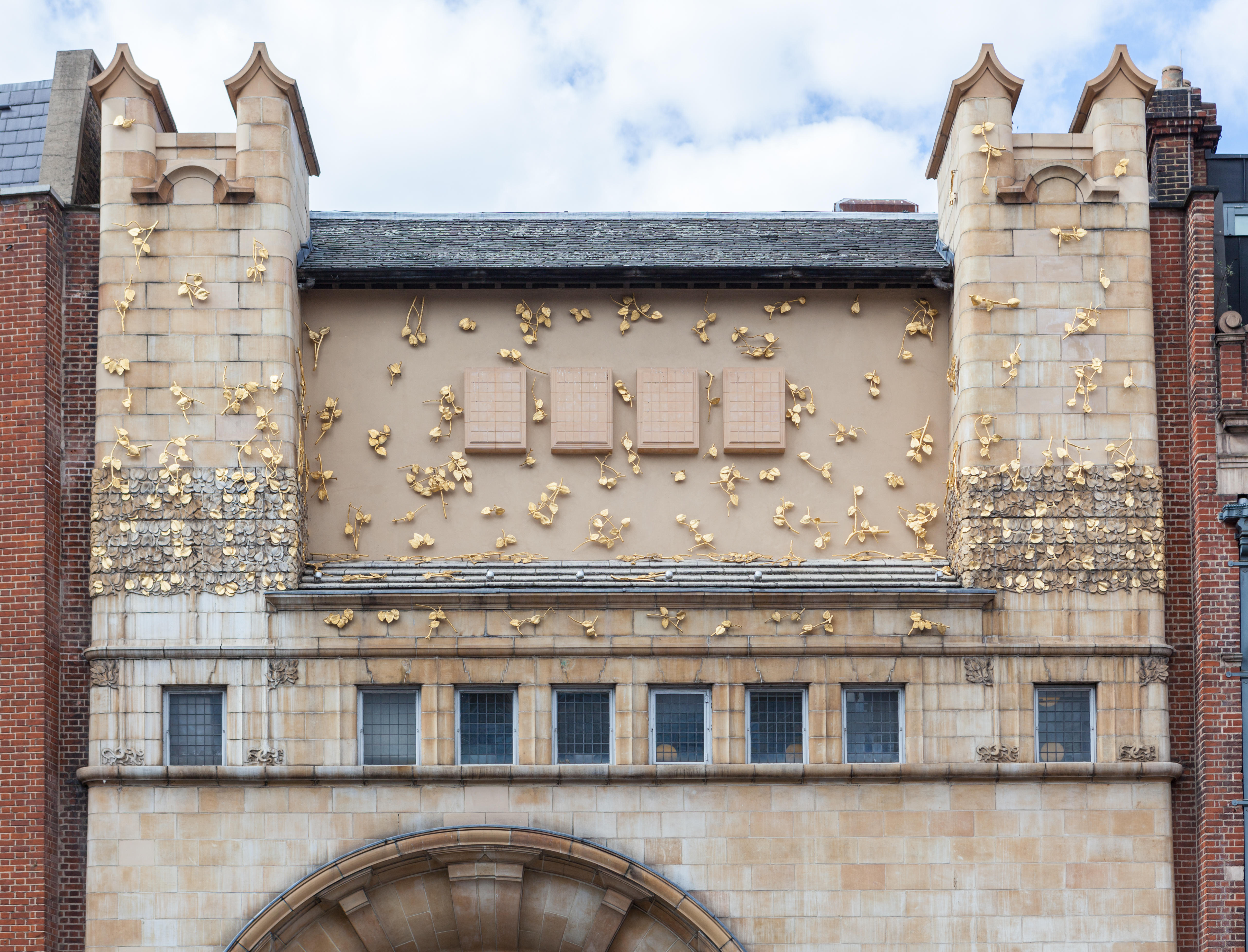
Which leads me on to your work within museums and how it's made its way into permanent display in museums or temporary exhibitions. For example, the Tree of Life on the exterior of the Whitechapel. How do you approach creating an artwork which is the first thing people see when they arrive at the gallery?
What I was trying to do was bring together seemingly quite disparate buildings to make them glue and join together visually. It was a very difficult thing to achieve because they're both Grade One Listed, making it near impossible to change the buildings. You might have to have a six months discussion about drilling a hole!
I'd just moved into a very big studio at the time and I kind of built the front of the museum in the studio. It was sort of in parts and so I used that as a sort of scale model. That was a very useful way of doing it. Obviously, I can't always do that because the size of my studios change and that sort of thing, but it was an interesting way of working.
I guess that's what's wonderful about working on a facade is that you are, you're making it more playful, aren't you You're making it something that feels more accessible.
I think so, but I don't know if it necessarily makes it more accessible. It might make it more intriguing. People that are frightened of going into museums. They're frightened because they have a kind of lack of education. I think it's getting easier and very different to how it was. Museums aren’t as stuffy as they were and people maybe don't feel quite so intimidated. There’s definitely a kind of ‘them and us’ feel still with museums and galleries I think.
Is there like an example of where you feel like your work has been displayed at its best way or where you feel like really happy with the result?
I remember when I was a really young artist, travelling around Europe, seeing a lot of Kunsthallen and Kunstvereine, which were often old industrial buildings just painted white with a few walls put up. For me, that's always the best way of sharing work. I think often that a lot of purpose-built galleries and museums and too self-conscious. Often, they’re by starchitects who make the museums because they're very prestigious things to design and then they try far too hard to put their sort of stamp of architecture on the building, which is great to do but only on the outside. I would stick to quite a conservative interior to a museum because it's what you need - white walls and spaces you can make dark. You need amphitheatres and those kinds of spaces. They are centuries old and continue to work very well.
I guess it's like decontextualising the space, isn't it? It's creating something that allows you to speak really clearly?
Yeah. I mean, architecture can be a very complex thing when it comes to cultural institutions. When it comes to music venues and places like that, there's a great depth to how those buildings can be used and sort of played - with all different planes and materials. But generally, if you're hanging pictures or showing sculpture, it's best to limit your pallete.
Does the architecture of an institution add or detract from the display of your work and how much of a consideration are the final surroundings of each work?
There are all those things that are thought about by the designer but are often over-thought so it becomes about lighting and texture and colour. Maybe you’re trying to just focus on a single object and, you know, the tray it's in becomes like a jewellery box, which in some way enhances it, but also detracts from it. I'm quite sort of specific in how I like to look at things. But, you know, I have painted white walls at home, you know, that’s just how I am (laughs).
On a slightly different tack - do you see yourself primarily as an artist or a sculptor?
I mean, as a sculptor, but for no particular reason. My degree was in painting and then my MA was in sculpture and, you know, I always sort of work between the two things in some ways. I do a lot of drawing and a lot of sort of three dimensional drawing, as I call it, so I think I'm definitely somewhere in the middle. I make as many things that go on the wall as I do that go on the floor. I think those labels are a bit old school these days, like, you know, art is art. It has many different guises.
You're definitely an artist that architects always really respond to. As I am an architect, I wanted to ask if you ever - because it feels like you're always working at scale and it's at the scale of a building or kind of architecture - considered becoming an architect?
No (laughs).
You have become the artist for architects though!
I could never sit there and work out where lights and switches and plugs and door-knobs go, you know. That would drive me mad. But, of course, I respect architects enormously and some great things have been built, but there's also a lot of mediocre stuff. It’s interesting now with people thinking about building materials and being more eco. There’s a different way of looking at things, which is good.
Thinking about how you deal with ideas around domestic, do you think it's a radical act to bring the private and domestic into the public space of the museum? And if so, what is it about the domestic that breaks with our expectation as a visitor to a museum?
Actually, I think it’s no more radical than placing picture in your house. We all live with images, objects, things, whether they're chosen or incidental, from a vacuum cleaner to a chest of drawers or a book on a table or whatever. We are surrounded by stuff and museums are places where stuff can be seen more clearly. There's more intent behind it, obviously, but, you know, I think, we mustn't forget that how things incidentally fit together is often the best way for things to be. They're like that for a reason.
Your work is often concerned with a form of memorialisation and with emotions surrounding absence. I guess that's something that we think about quite a lot when we're designing exhibitions, particularly for places like the Imperial War Museum or whatever, but how important is revealing or confronting the past for you in your work?
I mean, you know, the emotive is always something that I can engage with, even as a very young artist, especially when I was discovering my identity and my visual language. As a mature artist, you can use all of that, but you're also working with the rest of your thesaurus, so you're continually adding and editing. I think a lot a lot of my work is emotive and it has that human touch which is, I think, why people respond to it. It has a human warmth to it, even though it may look quite cold or minimal. There's the feeling of human breath with it.
That leads us on to the next question, which is about the relationship is between museums and memorials. It seems that their roles are both distinct, but also intertwined?
As a sculptor, my work with memorials all react to architecture in a very specific way. And they are made for a very particular places, I'm very clear about how I make things and where they're going. I don't do ‘plop art’ and I find it very difficult when things are taken out of context and put somewhere else. It's quite hard for me to see that because it changes its meaning.
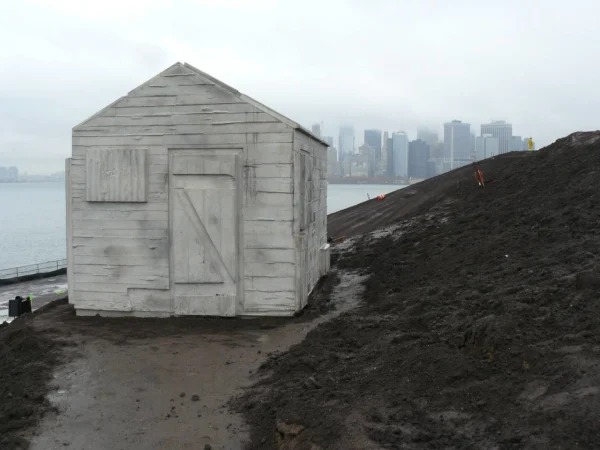
Which brings us on to talking about House, which I have to say, I remember so clearly when you did it. I was doing an MA at the time at the Slade, and it was such an amazing work. House was a work about past lives and therefore also about grief in some form. Do you grieve still for the disappearance of that artwork?
You know, it was never meant to be there forever and it wasn't made like that. If it was there now, it would be in a very sorry state. But I think it had a short life, shorter than it may have warranted, but it was a glorified thing, which people maybe took a little out of context, I don't know, but it was as much a political act as it was an artistic act. I've had I had the opportunity to make similar pieces, but I've resisted doing that. The power of that piece was that it was just there - and it was there for a short time and it's in people's memories and they're very strong memories. There will be a time when we're all dead and no one remembers it but I think when it was there it was very potent.
I guess part of that process is how it wasn't allowed to stay which becomes part of the impact the work has?
Yes, it could become about a philistinism, but it also became about feelings of jealousy surrounding housing and the ‘have and haves not’ in the East End. There were so many different sorts of arguments attached to it, which people were bringing more and more to it, and was a lot for the poor thing to bear really.
Has your process changed over time and does it start with the commission or with a very personal idea or emotion that that then adapts to the commission?
It's entirely depends. You know, I get to look at sites all the time and I would probably be interested in three out of ten of them. They become part of planning issues and, you know, there's a percentage set aside for arts within big planning schemes. When it's like that, it doesn't really interest me to be honest. What does interest me is when there's a sociopolitical context and something I feel I can add to. Someone might say, would you do this or would you be interested in doing it? And I might travel halfway across the world to go and look at a site and then decide that I'm not interested.
And it's like an emotional reaction?
Yes, very much a reactive thing that I will decide when I'm there and if it feels like it's something that I can work with.
The bravery of your work exists directly in the public domain, as with House and the Holocaust Memorial. And as we've just been saying, your work has drawn quite intense reactions at times. And do you think stepping outside the museum or gallery walls is much more exposing for you as an artist?
I like to work with both things. I can make my language work and feel very concise and work with it in a particular kind of way in a gallery. I love nothing more than hanging shows and working out the relationship between pieces - and how that feels. But I also like to stand back with the sky above and trees and buildings around you, and see something you’ve made in the public domain.
It’s quite an extraordinary feeling when work is in the public domain. It’s a very different thing and it can become invisible very quickly. And the intent of looking at it is not always there. It's something that you walk past or use as a direction - you know, turn left after the memorial. People use them as sort of markers as much as anything else. And it's I think it's kind of interesting when you become part of the urban environment in that way. Something that's much more happenstance, though I do try to work with that idea when I am conceiving the piece.
Your work has always had an emotional link to a historical context, but what relationship does that response have to the forms you choose for your artworks?
That completely depends on the place or the context - whether it's to do with history or something that's happening within the political world. You know, there are so many things like that to think about when I'm making something, so I can't be specific.
Your art often frees its subject matter from its original location, which is what we were talking about with the white walls, I guess. and performs a similar role to that of a museum in highlighting a particular subject with a degree of disconnection. Is there a similarity in that regard to the act of museum curation, do you think?
I think the job of the curator is very different to the job of an artist. A curator normally has an idea or a notion or something that they want to put in play with a number of artworks or a number of artists. And, I think occasionally, you, they can do it with one person, which must be, you know, a kind of a nice way of working too. But they generally have some sort of narrative or a sort of political edge and there's such a different way of working when you're a curator than when you're an artist. It's a very different role.
Our role is to kind of guide people through the design, working with curators. But in museums we tend to guide visitors by labelling objects and shaping the visits.
I find it really annoying when you go to a museum and the first thing you see are information boards. I think that you need free will when you're looking at exhibitions and not to be spoon-fed. To be guided is necessary for some people, but personally, I prefer to look, and then read about it if I want to, and then look again if I feel that the work warrants it. But people respond to things in different ways and often need words to guide them through things. It gives them the confidence to think, because particularly with art, people sometimes don't know what to think and they want guidance.
Given permission?
Yes given permission, exactly. I mean, to say to someone who doesn't really know about looking at art to just think whatever you like, just look at it and absorb, you know, embrace anything that it reminds you of or comes into your mind, a lot of people would be very confused by that as a notion. That comes instead from having had an art education, which gets you to think about things in a particular way and open your mind.
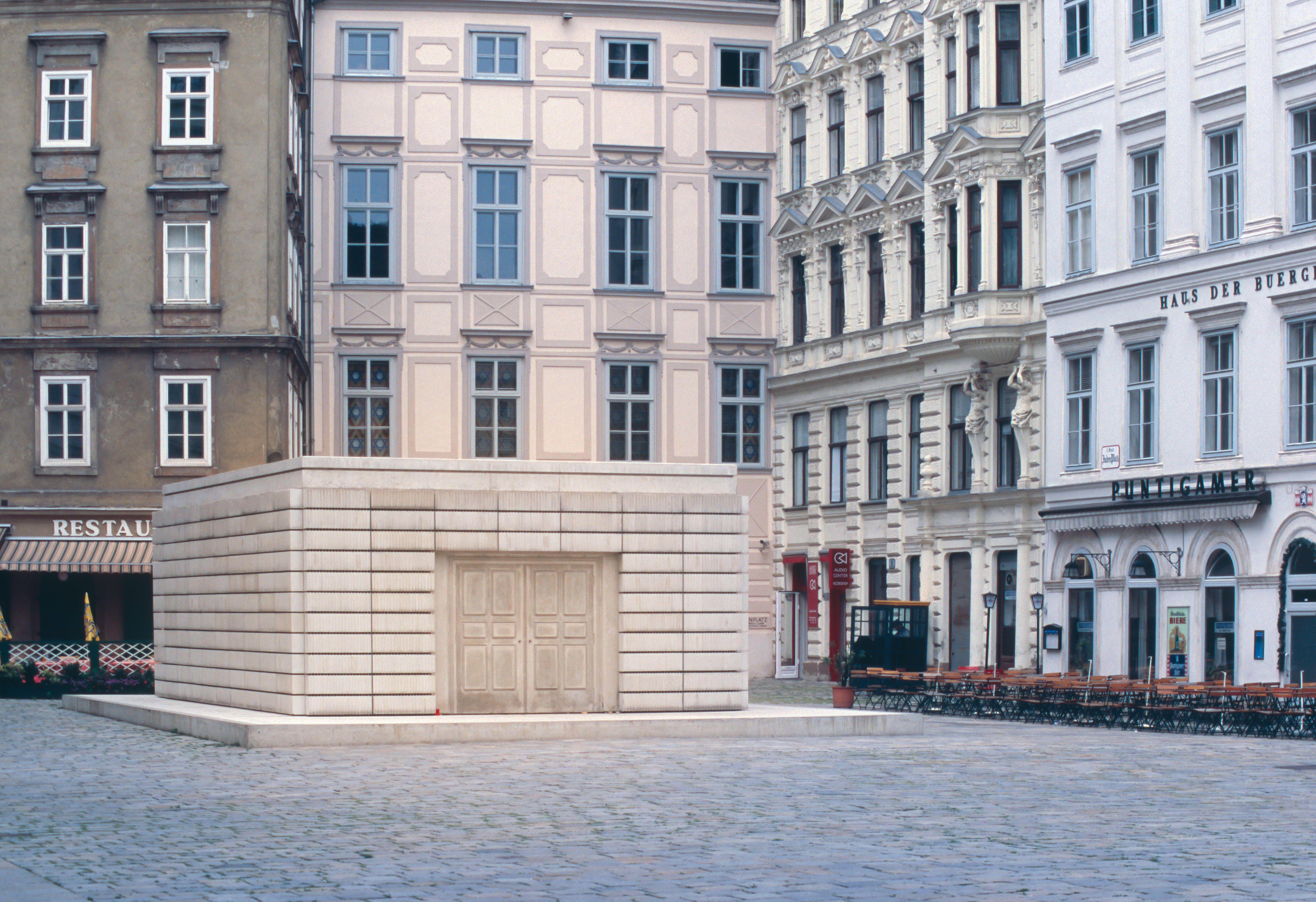
With something like Holocaust Memorial, if you didn't have the relevant historical knowledge, you'd have a very different reaction. So do you want people to see and view the work and have a reaction and then find out more?
Yeah, I think that's important. It's very important to have a to have a emotive and intellectual understanding yourself before you look at someone else's way of looking at it, telling you how you should think, because that's essentially what it is with info boards isn’t it?
So you want these layers of additional information but without piling it on or guiding too much?
Yes, when you go to a museum or a show, say at the British Library or somewhere, and it’s just completely full of white-haired people intently reading absolutely everything, it takes them an entire morning to go and look around. Which is great. And for a lot of those people it’s the most satisfying way of doing it - but not for me. It is far too prescriptive.
Well, thank you so much. It was really fascinating to hear your take on museum. This idea of having the space to have your own connection first is something I'm really going to take away from this conversation.
I remember with the Tate, when the Tate Modern was sort of being put together and a lot of artists were asked their opinions about how museums should be. I think, they did a very good job initially, where there'd be a large room for the work that you would be completely taken over before you started trying to find labels.
It was so radical, wasn't it? Because they went to the themes rather than chronology at the time. I remember that felt incredibly exciting, but obviously, that's now something that's done a lot.
Technology is also something that really winds me up when you're trying to look at an exhibition.
Me too. And also this idea of an immersive space.
Yeah, all this like going to a Van Gogh painting immersion, you know, really..
I mean - just look at the painting!
Exactly. Don't get me started.
Interview by Pippa Nissen, Director of Nissen Richards Studio
The Author