Who Does Heritage Belong To?
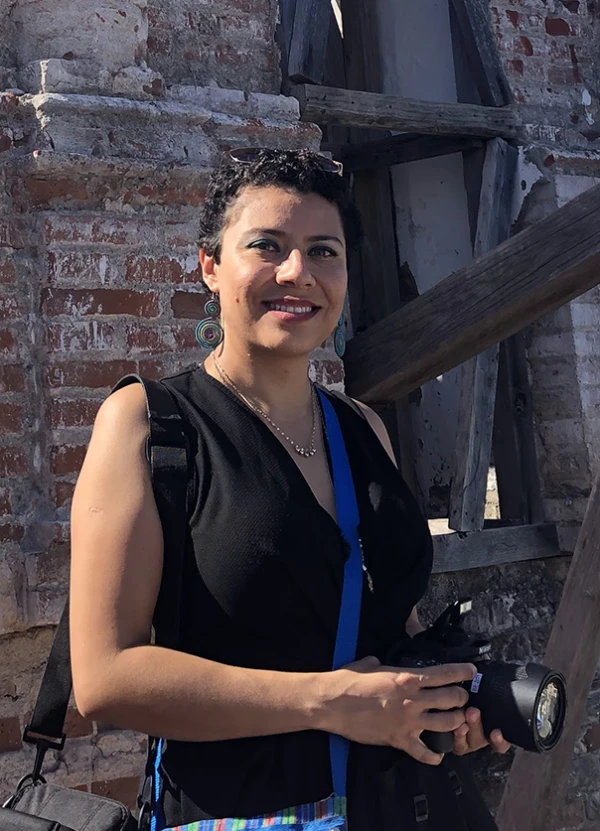
Mitzy can you tell us a little bit about your background and experience - how did you come to be an archaeologist?
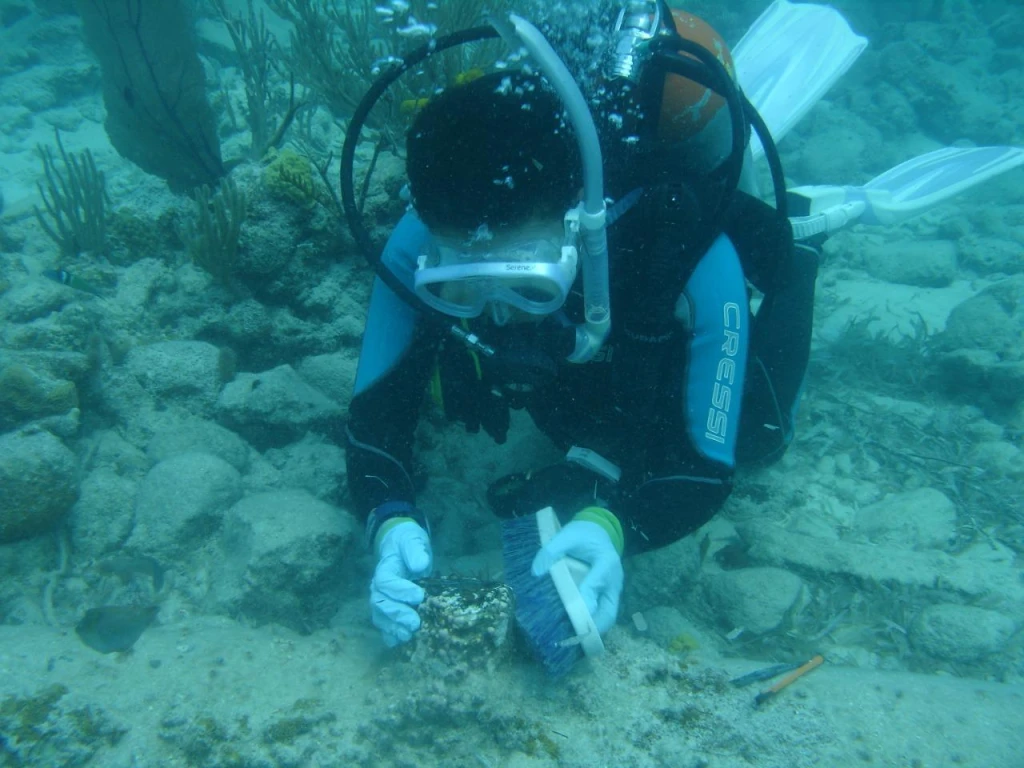
I’m a conservator and restorer by training, so I did my bachelors degree in Mexico City at the National School of Conservation, Restoration and Museum Studies, which is one of these UNESCO centres for the preservation of cultural heritage in Latin America. During this time I realised that there was something called underwater cultural heritage and I found that really amazing, to combine my different interests in sea life and the preservation of heritage itself. So I found the University of Southampton, in the UK, and applied for the masters degree and then for a scholarship and I was really lucky to have support from lots of places, from the university itself and from the National Council of Science and Technology in Mexico.
Thanks to them I was granted the funding to study and this experience really broadened my view and experience as well as my understanding of how heritage is not a product but a process. And by this I mean that it’s something that is creating itself all the time, it is changing. It’s not something that we see from a distance but something that is happening everyday. So it really helped me to connect with communities, because for examples when you work as a conservator, most of the places you are collaborating with are museums and galleries and different spaces and, your work is mainly constrained to the object itself rather than the landscape or the environment or the context. When I became a maritime archaeologist I realised that the context was key to understanding why an object was so important and how to build these connections with people and places and nature. So that really opened my understanding of heritage.
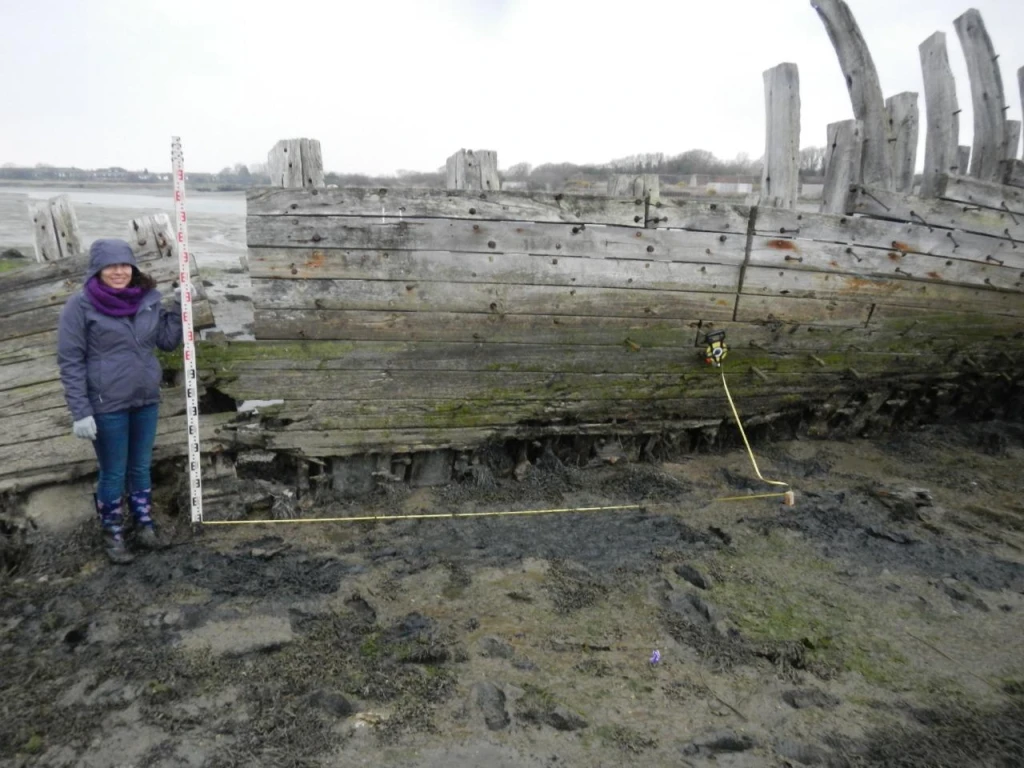
After that, I had the opportunity to work in the Mary Rose Museum in Portsmouth. It was a very beautiful experience, as I had the opportunity to look at an amazing example of preservation where different specialists had come together – archaeologists, conservators, engineers, architects – in order to design this beautiful museum. I decided to keep working in this field and applied to do a PhD and was very lucky as I managed to get into UCL in London at the Institute of Archaeology. This was around 2017 when I was about to start my programme, I came back to Mexico to renew my visa and then something happened that changed my life in every possible way.
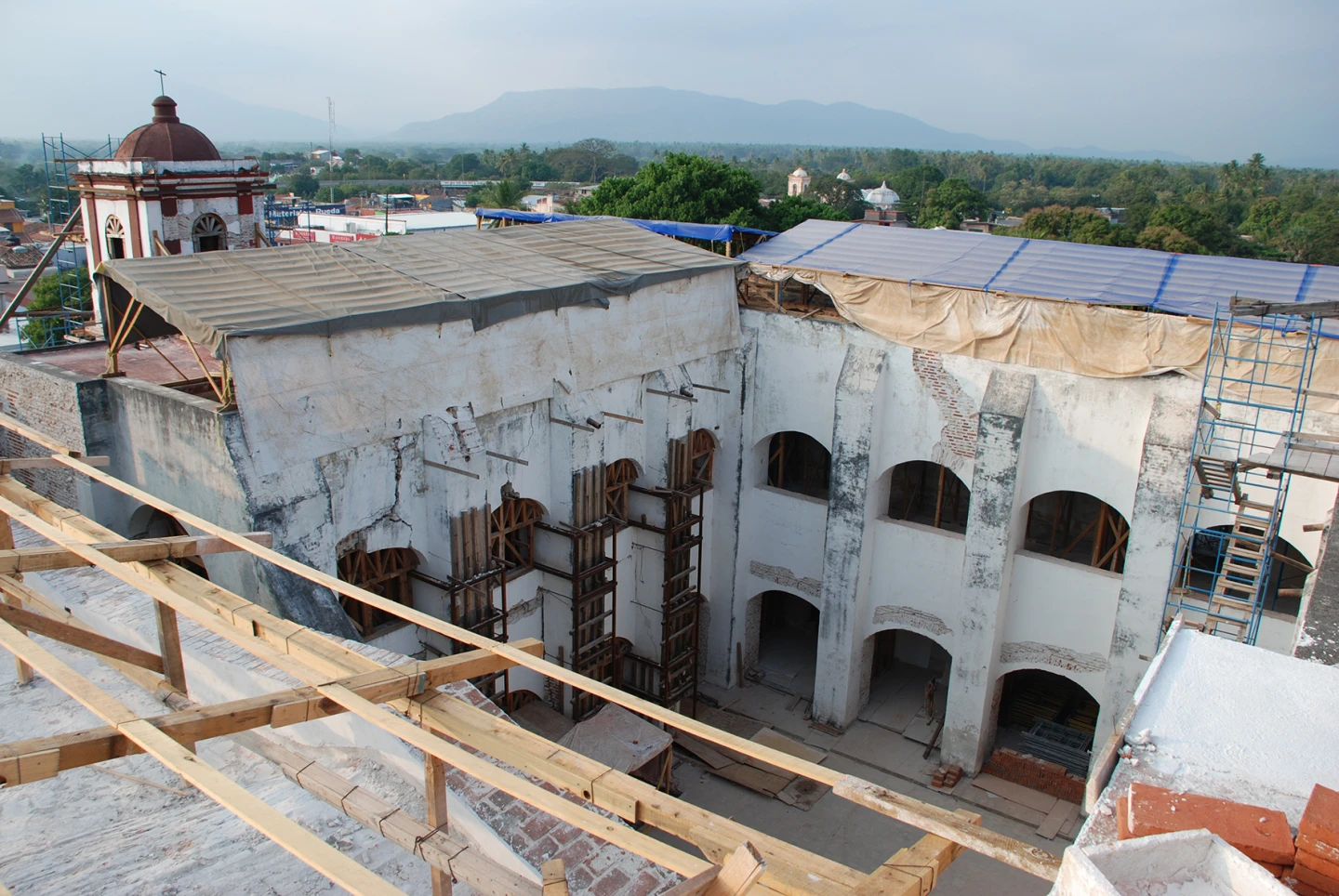
There was a series of earthquakes which hit Mexico City really hard, not only here but also the south of Mexico. I was in Mexico and was myself affected as the flat we lived in was damaged and we had to evacuate and relocate to another area of Mexico. And then there was this huge need for conservators to work in the restoration and recovery of cultural heritage. So there was an open call from the government and, since I was here in Mexico, I thought okay well I need to stay here and support my country and this huge effort because it’s a part of my story and my own heritage. So I deferred my entry to UCL by one year and started to work with communities that directly faced the consequences of not only the earthquake itself but also different disasters.
This must have been an extraordinarily difficult time in Mexico, being so affected by these earthquakes?
It was! Next year it will be ten years since these earthquakes and I still see so many communities affected in their daily life by hazards created by these earthquakes and that’s why I realised that there was so much to do here. But to stay wasn’t a decision that I made just based on my own experience, which was of course traumatic, but also a decision based on the long term effects that I saw in people.
When I had the opportunity to work with people, not from a desk but walking with them and getting to know their territories and mapping the hazards, I realised that they had so much to tell. They already had so many systems in place in terms of preservation, but this was mainly ancestral knowledge and sometimes this knowledge collapses under the institutional national guidelines for preservation and then the whole system breaks down. So that’s why I ended up working with communities rather than institutions. I try myself to be a bridge of communication and to bring together different views, but it is challenging.
I was going to ask you how the role of an archaeologist has changed over the years but I think, from what you’ve said, a more interesting question is how has your understanding of being an archaeologist changed over time? It feels like there was this moment of transformation for you from someone who works with objects to someone who works with people?
It's a good question. Yes, it has definitely changed through time and practice. At the start I was a conservator but then I realised how important it was to understand the sensory landscape, because the way we feel allows us to create a connection with an object and then we want to preserve something because it is meaningful to us. This isn’t something we can see in a book or from a distance. It’s about the creation of memories and memories are made through the senses.
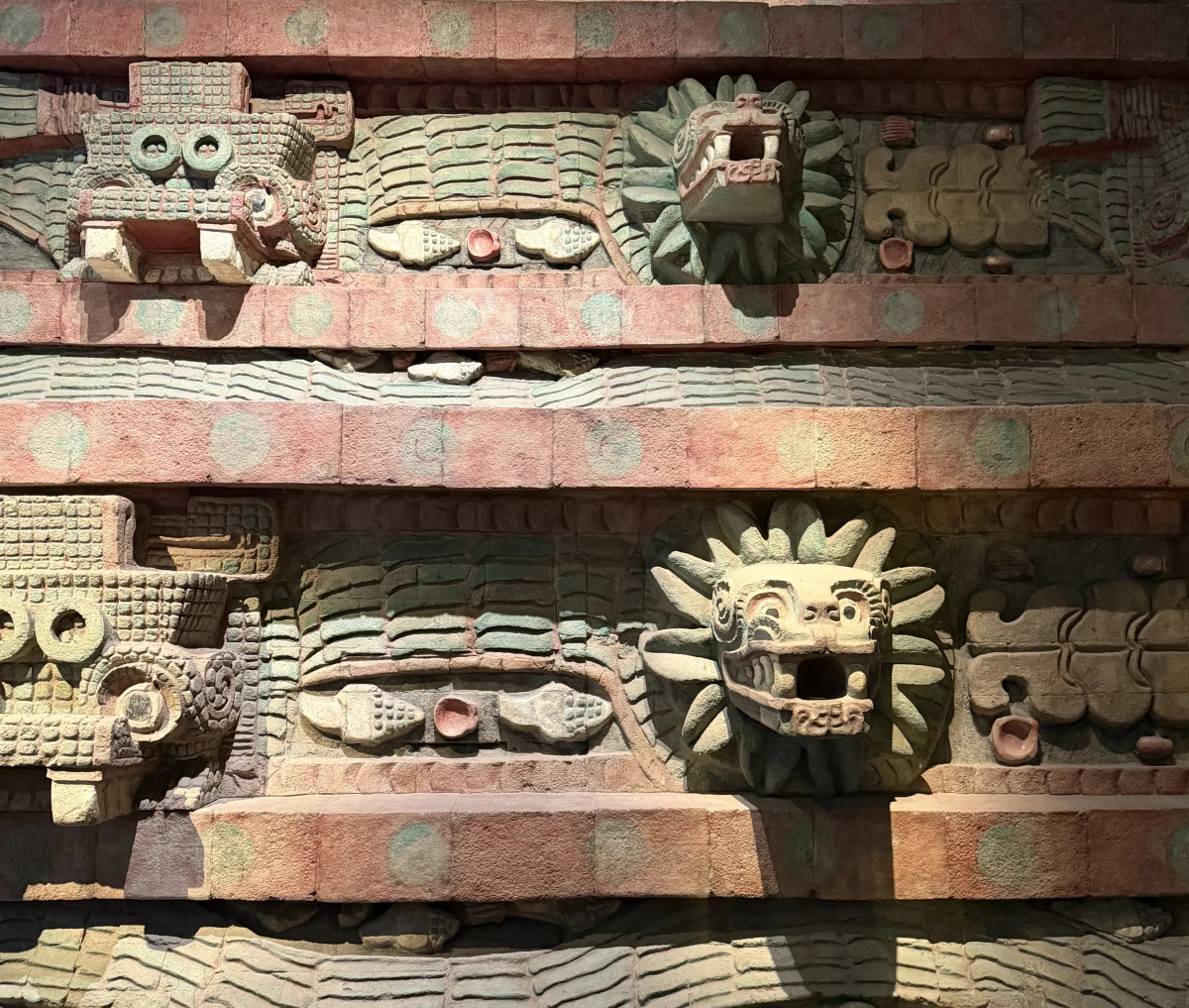
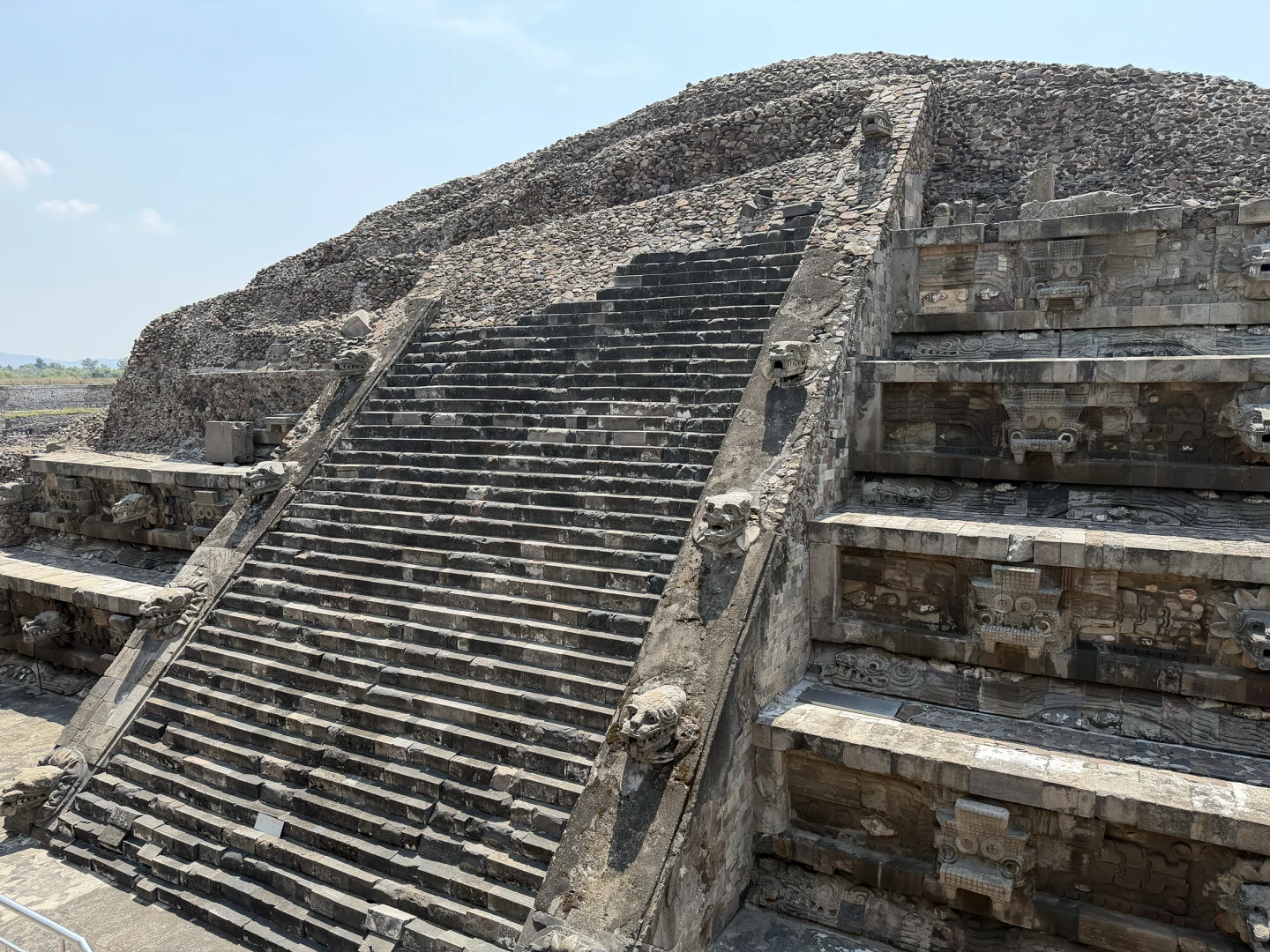
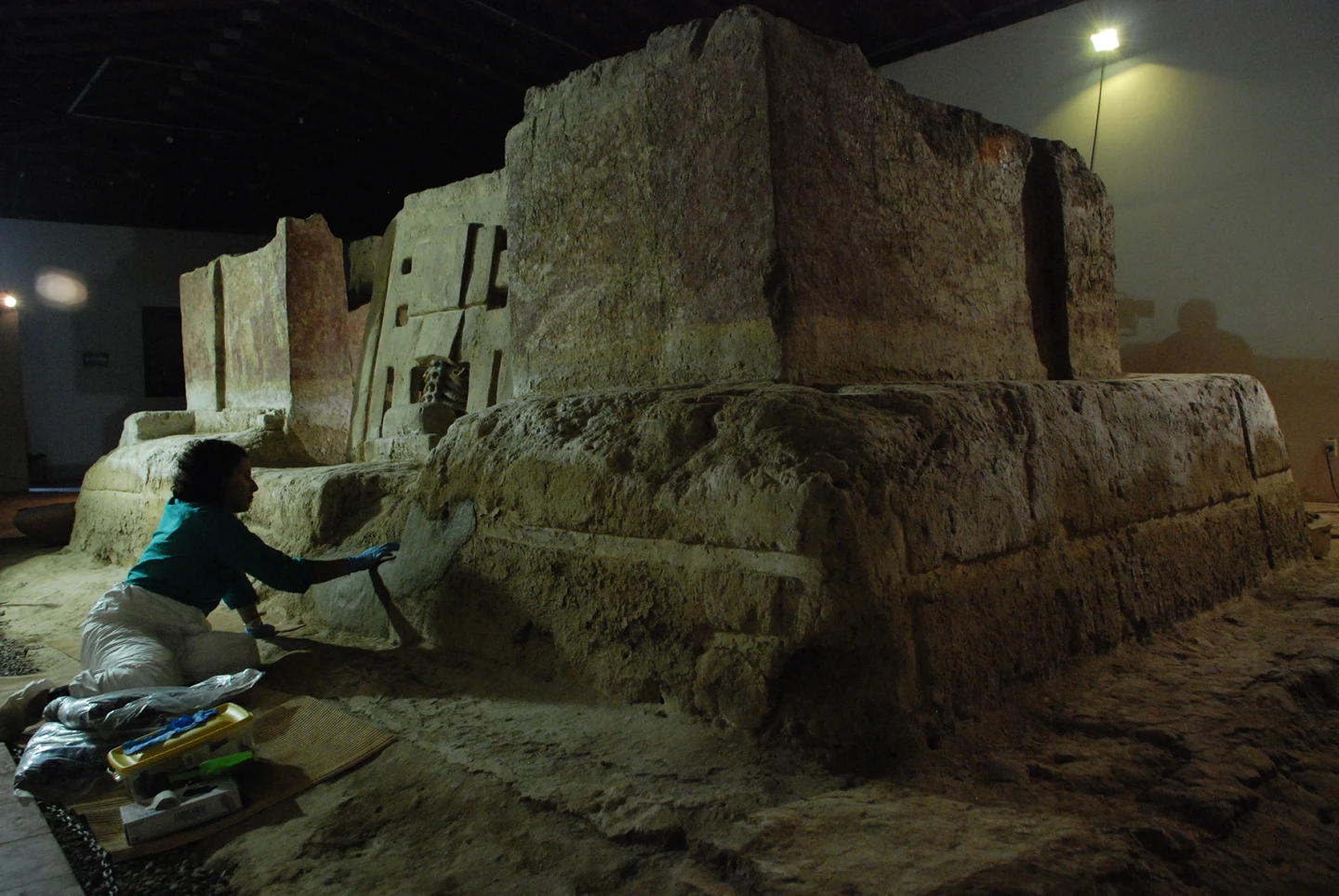
For example, at Teotihuacan, you are standing there. You are feeling the heat and understanding how difficult moving these rocks to create these pyramids would have been. It’s not something you can understand from a picture. It’s the technology and the understanding that if you have these beautiful and huge buildings and see how difficult or how easy it might have been for them to build them. These kind of things you would never question from a distance. If you see a picture or a video then you will never get this experience.
The sense of walking there and seeing the connection between the mountains and the pyramids and understanding that they relate to each other and they are talking to each other. And then, when you stand in a particular place, the mountains disappear because the whole architecture is designed to give you a sense of the three levels of the world that exist in the Mesoamerican worldview. You can’t get that from a model or a picture. Only by being there.
Connecting the small universe of an object, where I can explore the particles of the object under a microscope and examine the different elements in detail and the paint layers and then go to the other side, to the macro-sphere where I can see that all of this is connected to someone, to an idea, to a concept, to someone thinking that this red colour is going to be meaningful and beautiful but I need to trade with someone to get that red colour and take the pigment back to the place where I can do the painting is so important. Getting to this understand of all of this together makes sense. Then we understand that it’s not about just looking but also about feeling.
I love that sentiment. It quite rightly reminds us that to work with objects in a museum is also to work with people from the past and the present. It sounds like there is a big difference between your practice in Mexico and theoretical background in the UK. Do think there is a lot the UK can learn from Mexico in the preservation of cultural heritage?
Yes, there is definitely a different way of working in practice. But there isn’t an ideal place to work. All these places have their pros and cons. I had the opportunity to work in the Mary Rose Museum where I was talking directly to the visitors and it was lovely because I was so used to talking in an academic environment, in conferences or symposiums, using very academic language. But suddenly I was talking to people who were without that language and I was learning how to communicate to a new audience and learn to use references from daily life so that anyone, from any background could understand.
So when I came back to Mexico and was working in communities I had already practiced these skills and could speak to visitors. Something that I found really touching was that we used to understand the act of conserving as something that only specialists do but instead I came to understand it as something that is part of our human nature. It’s something that only humans do. These are the things that differentiate us from other animals. We conserve because things are part of our legacy, because they are meaningful to us and part of our stories and our histories. So in the same way we preserve our favourite t-shirt, people in the past used to preserve these things. The idea that only trained conservators and specialists are allowed to preserve is something that I’m really trying to break down. I am really trying to empower communities and tell them that I’m actually just a facilitator and someone to give you some tips and information and recommendations - you’re actually the owner and you know what you’re doing because you’ve been doing it for centuries.
Since your experience of these terrible earthquakes, you’ve been working on creating strategies to preserve cultural heritage that bring together all of these strands of thinking to preserve cultural heritage in the wake of other natural disasters as well?
Yes, at the beginning, in the aftermath of the earthquake in Mexico, I would talk about ‘natural disasters’. But then I realised that there is no such thing as a natural disaster. A disaster is cultural, it’s political, it’s economic. Nature is not plotting and planning against us to destroy us. It has always been there, and we are just another animal sharing this space, but it is our human decision making that turns a natural hazard into a human disaster.
I also found when working with affected communities in Oaxaca where they still have link to pre-Hispanic cultures. In some of these places, like the Zapotec people who I was working with, they explained to me that when a specific shape forms in the clouds and there is a reddish light and the birds are moving around in circles there is an earthquake coming. I couldn’t believe it, until I experienced it.
What is funny about this is that in Mexico City I was so used to hearing the early warning system for earthquakes, if I don’t hear the alarm then I don’t worry. But with this community they don’t have that system, even though they are one of the most impacted communities.
But even without that investment they have inherited this ancient early warning system through observation and looking at their environment. I found this really beautiful, they have developed a system over thousands of years and it works – even though there was a huge toll in terms of destruction in terms of buildings it wasn’t as bad in terms of human life because they went out of these buildings and they knew how to act. In Mexico City, people expected the early warning system and therefore when the alarm didn’t function until too late, there were more human lives lost. It shows that there is nothing natural about a disaster – it’s human decisions that are connected to political and economic decisions.
So, in my journey from a conservator to an archaeologist, I also became an anthropologist because these things work together, they are not disconnected. All these disciplines belong to the same area of understanding living cultures. Everything is connected somehow.
We often see people working in silos, but being open to that interdisciplinary approach can be beneficial to everyone. But your work spills out beyond museums into historic spaces of other kinds, what do you think we can learn from these spaces?
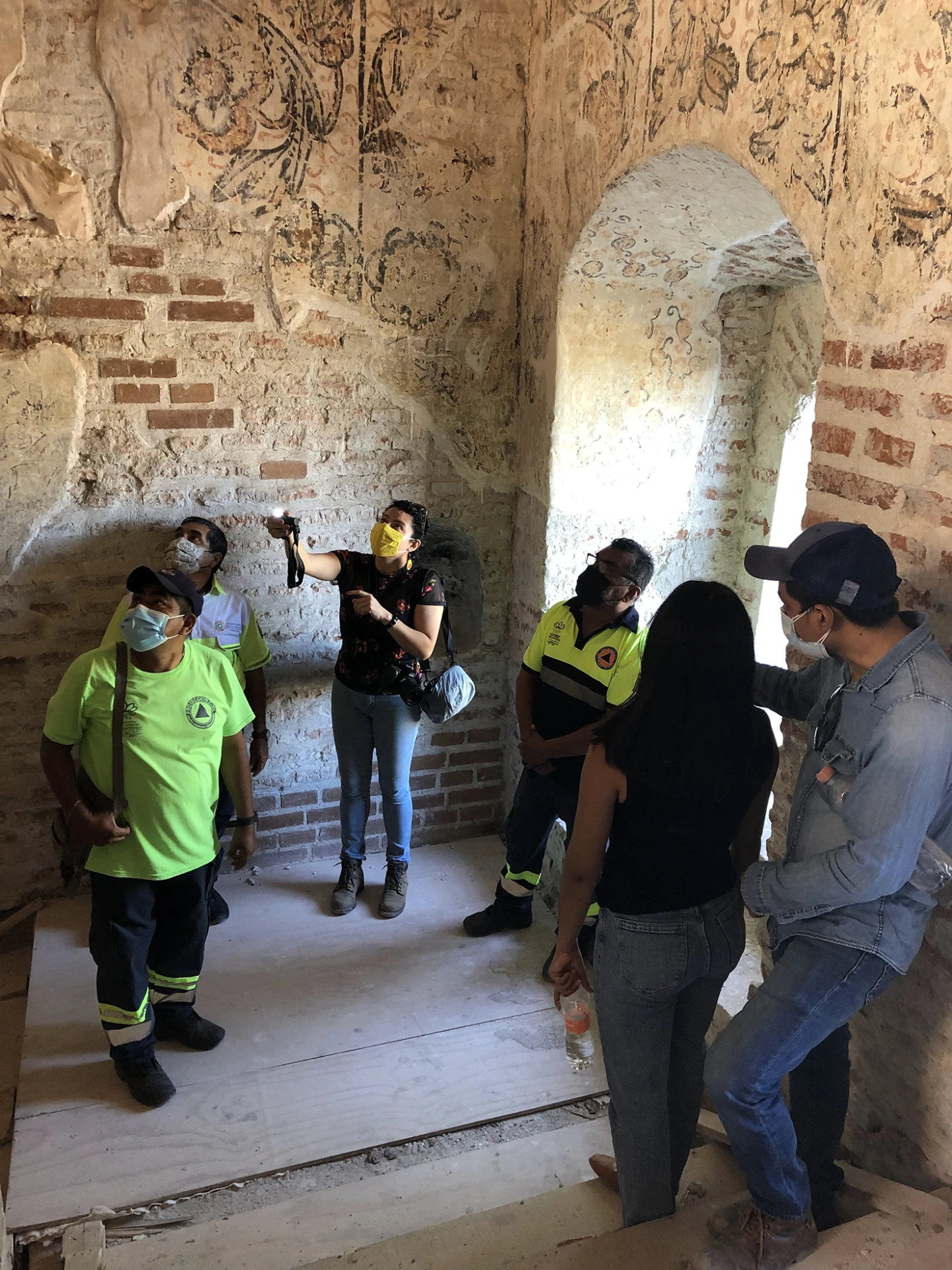
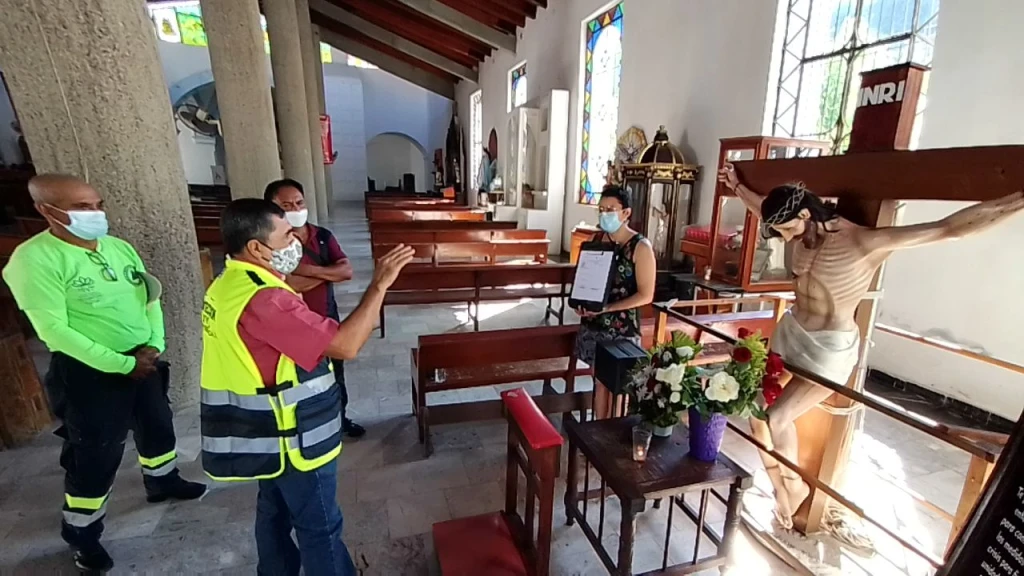
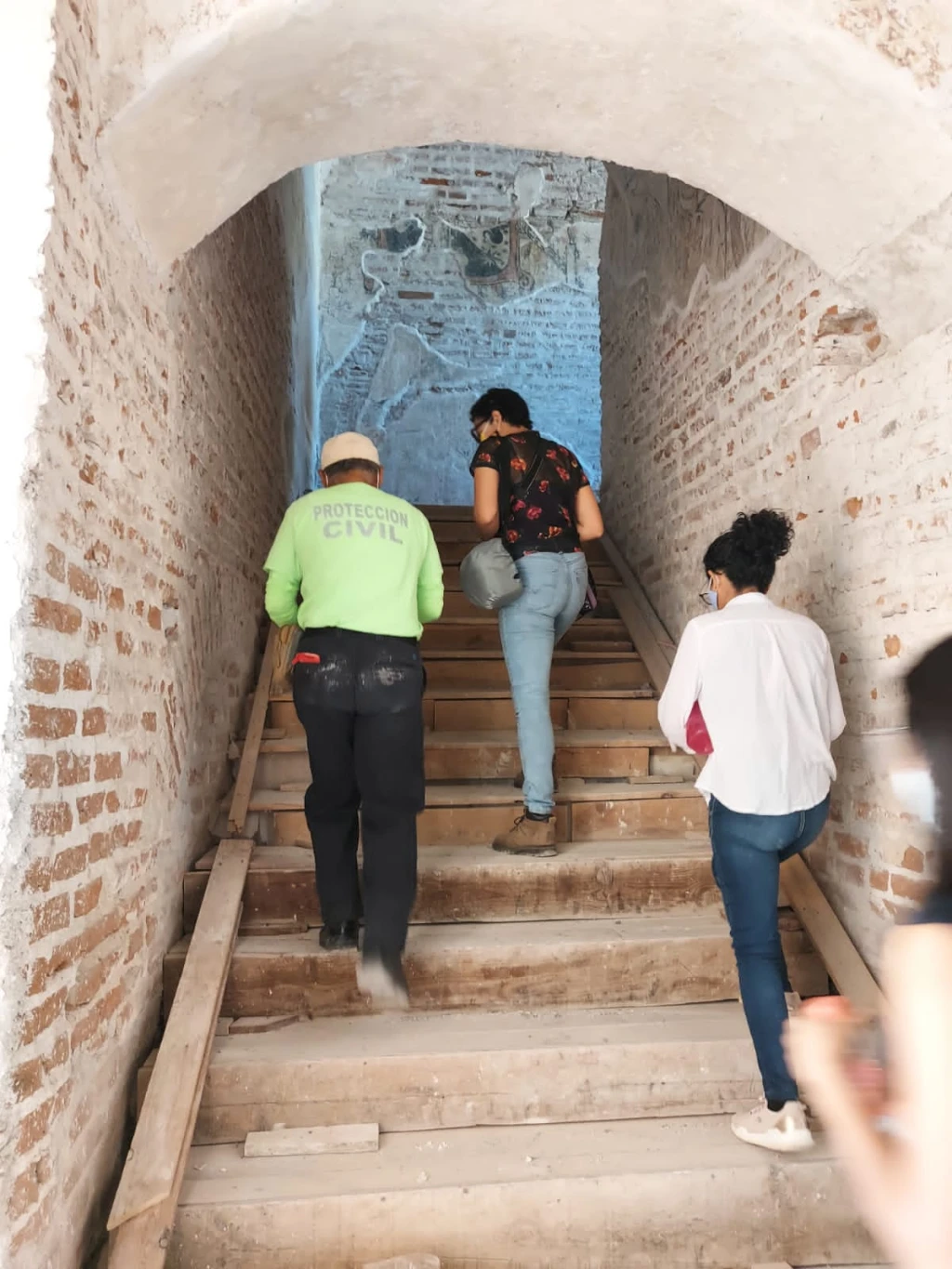
After the earthquakes, most of the heritage that was affected was not in museums, it was in cultural buildings, churches and historic buildings. In the history of Mexico, we have a diversity of cultures, we then have a clash of cultures when the Europeans arrive and then we have this culture that we call Mexican culture today. But if you go into a colonial building it might be a political building but most of them will be churches as they were built as part of the colonial period and here you will see a mix of world views and the unification of different materials. When the Spaniards arrived, they saw the handcrafts of the local people and the quality of their work so instead of bringing their own artisans, they taught the local people the iconography and then got them to paint the murals in the churches, create the sculpture and craft the altar pieces.
So, if you go into an old church today you see the presentation of the catholic iconography but with techniques and abilities of the local artists. In these places I met people who said that they could not leave the church without taking the central altar piece in the church because it’s a living heritage for them, it’s a powerful, living entity.
In museums we look at these objects and we think about what we can control, they go in a case with temperature and lighting controls. But you cannot encase a person. A living entity. It is the same with this heritage, you cannot put it in a case and say okay you can’t touch it anymore. So, the approach has to be different and the way you talk to people but also your sensibility has to be different and you need to approach these moments in a different way.
Now, when I’m working with them, I can understand what they feel about these subjects. This is why I understand that heritage is a process and not a product. It never finishes. It refers to a specific point in time, but it also talks about how today in our everyday life objects have a meaning and we want future generations to see these things.
This approach is very interesting as in the UK we talk a lot about engaging with communities but I haven’t heard of as many examples of communities working together to preserve and care for heritage objects. How do you think we can learn from this perspective to ensure that we bring communities along with us in museums across the world?
Something that we could do to get people closer to their cultural heritage is to take it to the streets. It would be beautiful if you could walk past the train station and instead of seeing a fast-food advert you could see the image of an underwater cultural heritage and start a conversation about what is this object and why is it here? Imagine if we had these images in public open spaces, instead of forcing people to be in enclosed spaces in museums and galleries. Allow people to take them in as part of their daily life as they are walking past.
What we want is to change the perspective from pure involvement to real engagement. Pure involvement is when you’re invited to the party but you’re not invited to organise or be part of the making of the party. But engagement is when you’re told that there’s a party happening and you’re asked what you want to bring along.
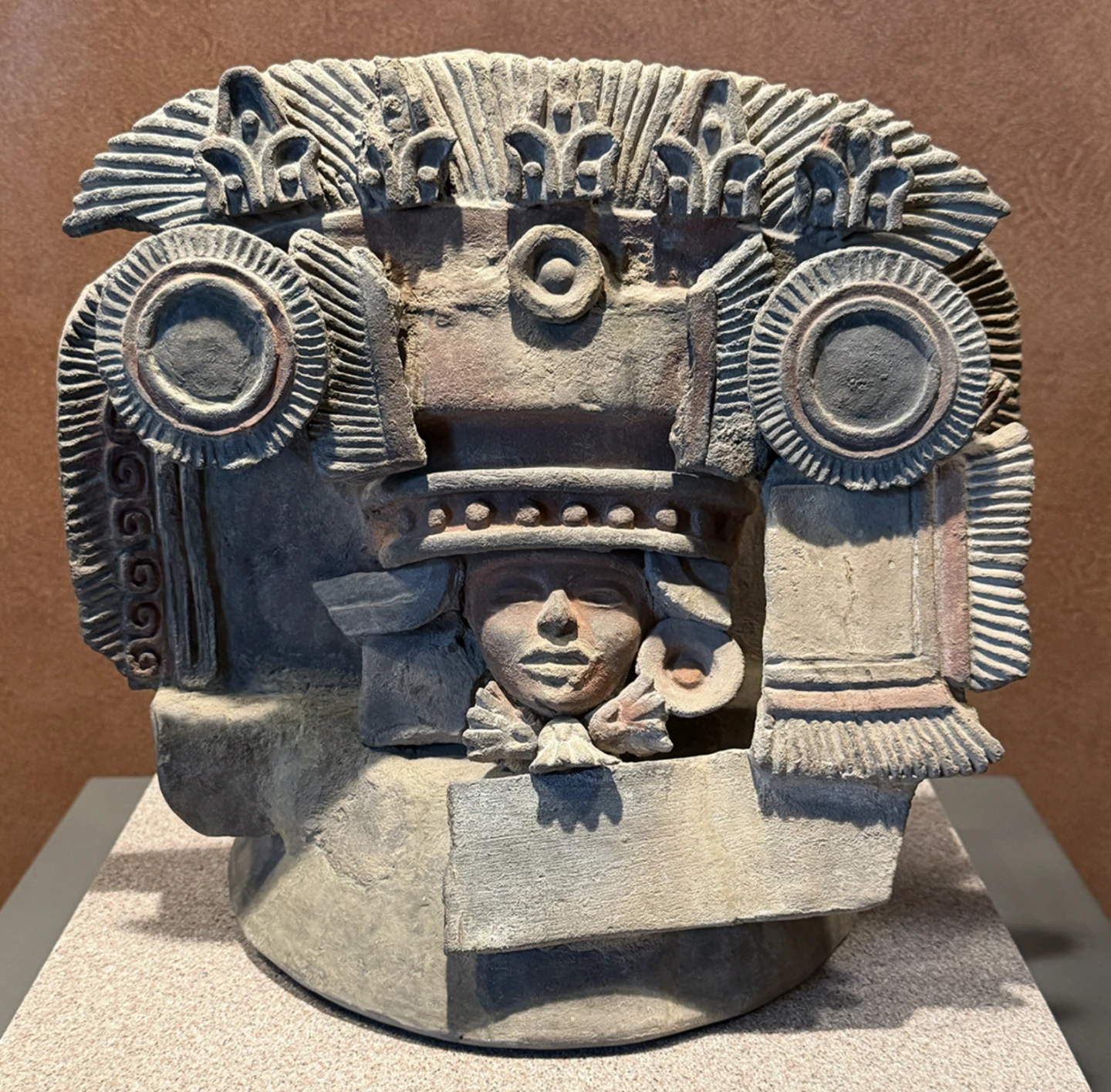
One of the critiques I have is that there are all these beautiful exhibitions all around the world on the Mayans or the Aztecs. They are these huge exhibitions at the British Museum and they’re always best sellers because people want to know about them. But what about the living Maya? The people who still live today? There are still Maya and they speak Mayan, but they are not included in the conversation and they are not even invited into the room.
So their heritage is displayed but it is about displaying the heritage of an ancient time rather than the living culture. It’s uncomfortable for these institutions, they don’t want to show the poor Maya or the artisans who are facing the consequences of selling their art outside of an archaeological site. They just want to see the greatness of the past. This is something I really criticise because when people don’t listen, that breaks the communication and destroys that heritage because if there is not a written record how can we use and keep that knowledge?
What kind of strategies do you use to address this gap in knowledge and understanding?
Well, to preserve these heritages we need a written record. We need to write these things down and listen to people, and to record drawings and photographs. What we do in my work is we walk the space with people and we map it together, recording the hazards and also the points of knowledge and heritage. Once we have done this journey of recognition through a territory, we put this all together in an open access map online.
This is the methodology that I created in my PhD to record heritage together and create free access through technology. We have workshops to show people how to add photographs and locations on the maps to keep all that information together in a conscious and engaging way. Involvement would be me asking them to tell me and then I make the map, but engagement is about giving them to tools to make the maps and them deciding what to display and how they should display it. And then they can share it with people on their community group on WhatsApp so that everyone can participate.
Interview by Echo Callaghan
The Author